
The Cosmic Egg
Click for this Resource!
In all chaos there is cosmos, in all disorder a secret order — Carl Jung
The Cosmic Egg is a universal cosmogonic or mythological symbol dating back millennia. Utilized by a dozen or more cultures worldwide in their creation stories, the archetypal egg motif represents the origin and foundation of the universe from a state of chaos (or nothing) in a simple universal form, inspiring art and spirituality for thousands of years. Such symbols reflect the shared human quest to explain and connect with the origins of the cosmos via essences and forms, capturing both in story form.
Forms and essences, or matter and spirit, have a dynamic integral relationship in the created order, underscored by Teilhard de Chardin who laid the pioneering groundwork for a Spirit-Science synthesis and New Universe Story based on what he termed cosmic evolution or christogenesis, a cosmo-theology of his time. This novel paradigm is comprised of a mid-twentieth century process theology which remains somewhat controversial, implying horizontal causation (chemical evolution) re: origins as central to its cosmogenic model. Nonetheless, cosmogenic integration is a work in progress, the specialized interest of a number of global synthesis groups, including those at DTN.
In building synthesis models, forms can be viewed as material structures that both out-picture (image) the invisible archetypes and contain the essence(s) that shape, animate, and give them life. Essences “breathe” life into material reality in animating ways. In a classic triune view of the human person as consisting of body, soul, and spirit, the spirit-soul animates and informs the human body, as air lends ‘body’ to a balloon or pneumatic tire. Essences are inferred from the forms that out-picture them, as an object’s shadow implies the object it casts, or a blueprint prefigures a building project. As for origins, essences are uncreated energies that inform and trans-form natural stages of growth (affecting perception and thought) in development toward personal (psycho-social) and transpersonal (spiritual) identity toward unitive consciousness. Essences in-cohere what only appear as separate parts or entities of the whole, and upon physical death also de-cohere (separate) in wholes from the material bodies they inhabit. The data for same is ample and abundant via numerous near-death experience studies (NDE’s), in keeping with perennial religious views dating back millennia. Essences emerge and exist into space-time, but do not originate or exist in either space or time, the horizontal (material) and vertical (spiritual) dimensions of creation being co-present and complementary in the space-time field, less paradox than synthesis.
Of the many ancient cosmic egg mythologies that attempt to more sharply image, explain, and reconcile the dynamics of form/essence interconnectivity as they pertains to modern science, perhaps there is none more representative than the ancient myth of Phanes (Protogonus). In the Greek Orphic tradition, Phanes (pronounced “FAY-niss”) is the God of origins, representing the beginning of life, light, and order in the universe. Phanes, whose name means “to shine” or to “bring light,” was depicted as a primordial deity of light, goodness, and creation, associated with the cosmos and life’s universal emergence. As to origin/essence connectivity, a similar account as it pertains to light is given with respect to the names of God in Hebrew, El (“The Shining One”), and Elohim (plural, “The Shining Ones”), both having Sumerian roots in the Semitic languages.
Nothing is more consistent or more fleeting — more fused with things or at the same time more separable from them — than a ray of light (Teilhard).
Actually, the image of Phanes combines three archetypal images, the egg motif (form) from which he and the entire universe emerged, light (the egg’s layered essence), and a snake (spiral motif) which is sometimes depicted as coiled around the egg, or around Phanes’s body contained within the egg. A significant symbol in many ancient cultures, the snake represents a variety of concepts including birth, protection, and wisdom. Like spiraling labyrinths, ancient serpent gods often wound around a valuable treasure at the center of their coils, thereby protecting it, as in the case of the Orphic Cosmic Egg here mentioned. This hidden center has its parallel in physics in the zero-point. The zero-point is the key sub-atomic nexus or portal connecting the quantum world with the space-time field, where exist spinning, chakra-like portals (interface vortexes) between the visible and invisible, inner and outer worlds, detailed in the author’s book. There, he proposes that inner and outer, visible and invisible worlds are the same world existing on a continuum of light and sound frequency vibrations operating under the same dynamics and energy transformations throughout.
Images like the egg motif and other geometric shapes which occur and repeat themselves cross-culturally are significant signposts pointing beyond themselves. Such are key icons in discovering the hidden mysteries they merely point to as foundational to the created order, and which coalesce around a central axis in a linked organic pattern. (Note: Like with seeds and embryos, it is in the inmost of things that nature secretively conceals and protects her sacred center points.)
All things are metaphors — Goethe
Modern day cosmologists and theologians have broadened their understanding of divinity, providing an updated and integral sense of the New Story by framing the historical perspective of their founders in a manner consistent with modern science. Their challenge is to do so while preserving the perennial principles of their religious or mythological traditions which identify patterns and essences that repeat themselves and are always true — like the egg and spiral archetypes, notions of Spirit, and the phenomenon of light associated with origins, gods, and divinity worldwide.
Hence, the “Universal Christ” refers to the concept and reality of the Christ as not merely a historical person or sectarian religious figure, but an organic cosmic presence embedded (incarnated) in matter throughout ALL of creation from the outset, manifest in human and nonhuman forms. This ubiquitous light re-casts divinity (Spirit) as present in every living thing, not limited to one sectarian religion, in essence making it (him) the universal and unifying force that incarnates in the universe everywhere. This idea, associated with Franciscan theology, is popularized by theologian Richard Rohr throughout his book The Universal Christ, emphasizing the cosmic nature of divinity within yet beyond the person of Jesus of Nazareth, whose human form and teachings offered a window or transparency into same. This “push-pull” of counterbalancing forces between outer and inner, matter and spirit, lower and higher create a tensional integrity (tensegrity) of the “within and beyond” of things that exists everywhere in the created order.
As the divine essence is above (or deeper) than the mind’s faculties, this push-pull of forces can be seen and experienced in higher forms of consciousness. An aspect of our inner ecology (spirit-psyche landscape), it is situated between the two, in the tiny hyphen (structural membrane) that connects them both. Acting like the space between cells, tissues, and organs, it is interstitial in nature (from the Latin “interstitium,” meaning “interval” or “space between”). As the liminal space held in common between matter and spirit, people and God, light is perfectly suitable as the universal membrane, go-between nexus, and solvent for same. Reason being that in pure form it is free of all names and bare of all forms, images, and traces of the provincial and sectarian, the virginal sheath, substance and citadel of every living spirit-soul. In this part of itself the soul (light or Spirit) intersects more directly, equally, and intimately with the divine than anywhere else, and is their private trysting place.
Draw me away! We will run after you. The king has brought me into his chambers. We will be glad and rejoice in you. We will remember your love more than wine (Song of Songs 1:4).
The tensional integrity between inner and outer, matter and spirit are also experienced negatively (symptomatically), when balances are out of alignment, as in chaos, disorder, in times of stress, with the onset of physical and mental illness, or during major paradigm shifts, as in climate change.
Along similar lines, Episcopal priest and Creation Spirituality theologian Matthew Fox also has a view of the Christ as cosmic, referring to the state of being and living consciously aware of Teilhard’s notion that matter and Spirit are one organically, which the Jesuit paleontologist termed the “third nature of Christ.” In his book The Coming of the Cosmic Christ, Fox affirms notions of the Comic Christ as the oldest Christology in the New Testament. That is evidenced in the writings of the apostle Paul and the Gospel of Thomas (and in the Gospel and epistles of John). These first century Scriptures initiated an awareness of the omnipresence of the Christ universally along organic lines in the microcosm and macrocosm of the universe at all scales, innermost and outermost. At that time, science had not yet been developed in order to pursue more granularly what the Scripture amply pointed to as matter’s organic constituency.
Ironic, in that for the last thirty years of his life Einstein tried unsuccessfully to formulate a unified field theory of the universe, right up until a few hours before his death. Having fallen short of same in his lifetime, he regretted not having spent more time studying the phenomenon of light as a liminal (interstitial) pathway to same, and central in his field equations. As with Teilhard, it behooves those who continue to look for reconciling universal constants to learn from his genius and experience. And to further realize that there can be no unified theory of the cosmos in the absence of the kind of integral seeing and knowing that stems from unitive consciousness, the primary catalyst in the whole-making and synthesis process. Make no mistake, there can be no effective unitive consciousness without a higher order breakthrough to a transpersonal plane (and self) that sees in wholes and can interpret (recast) the universal inner meaning of archetypes and figurative language of world religions, holy writings, and mythologies under a single unifying element.
Along with Einstein, neither theologian’s Rohr or Fox offer a substantive notion of what the constituency of that mystery organic component in matter might consist of along scientific lines. However, in his writings Teilhard de Chardin most definitely alludes to that universal element as light, and the relationship (tensegrity) it has with matter throughout his writings. In this quote from The Divine Milieu below, at the last Teilhard capitalizes the word “ray” in reference to light, giving deference to it in association with the Holy One.
If the divine milieu reveals itself to us as an incandescence of the inward layers of being, who is to guarantee us the persistence of this vision? No one other than the Ray of light itself (Teilhard).
Ironic, in that similar to Teilhard, the ancients were devoid of the advances of modern physics and technology, and seem to have a better transpersonal/intuitive grasp of same – implied in the Orphic tradition of Phanes, “The Light Bringer,” and in the Genesis 1 account of the centrality of light in creation authored by Moses. A biblical account of same is also rendered in the experiences of Moses on Sinai, in the Shekinah pillar over the desert tabernacle, and later in the birth at Bethlehem, over the resurrection crypt, in the apostle Paul’s blinding experience on the Damascus Road, as it illuminated those on Mount Tabor in the Transfiguration, in the descriptions of Jesus who defined his own transpersonal identity as “The Light of the World,” and in the apostle’s John description of him as “the light that lights every man who comes into the world.”
As archeological digs worldwide have recently discovered, in several ways the “ancient” world may have been more spiritually enlightened, wiser, innovative, and even more technologically advanced than previously believed.
Leading others on a synthesis journey involving the kind of thought and perception beyond ordinary consciousness in ordinary space-time requires being informed by a perennial wisdom tradition. Only in wisdom traditions does one learn to empty the mind in order to be open to transcendent (transpersonal) consciousness. Brilliant as he was, Einstein was closed to that mode of knowing, and so as a deist he lacked the kind of unitive or mystical consciousness of a Teilhard, Rohr, or Fox, and so was a stranger to the deeper insights thereof. Via their common wisdom tradition, and unique transpersonal identities, the latter three theologians have brought us closer to the synthesis mark, and the oneness beyond space and time that is truly transformational. As an effective means of approximating same, redefined and updated by each in recent history, there may be something unique about their wisdom tradition that points more definitively to the organic nature of God everywhere that warrants a closer look with fresh eyes. For it is looking at what is already known with fresh eyes that will at last behold and assemble the golden egg of synthesis all have been waiting for.
Though antiestablishment, by closing the gap between science and religion, Teilhard earned the reputation as the fourth major thinker of the western Christian tradition, after St. Paul, Augustine, and Aquinas. He amalgamated the physical and spiritual realities in ways that more closely established their seamless co-presence than anyone before or since. As a result of his work, a synthesis seeker from either science or religion would be hard pressed not to consider that the empirical and the transcendent were anything other than seamlessly co-present to one another. What remains for those who follow is to explain how more scientifically, and by what element(s) organically. Had he not disregarded the Genesis account of creation as revelation, particularly the role of light, and had he been more familiar with the writings of his own faith tradition which underscored the role of light throughout its pages, the gift of creation’s holy grail of synthesis might have been wholly his. Nonetheless, synthesis without Teilhard would be like physics without Einstein, or music without Beethoven. Any breakthrough in science must therefore be attributable to him, who set the synthesis table leading to the discovery of same. There is no need to reinvent the questing wheel. Following in his mystical footsteps, along with those of Rohr, Fox, and the wisdom tradition that got each of them this close to solving the mystery, should be the ticket to take any serious synthesis quester the rest of the way to Omega. The author believes his novel synthesis paradigm, slow to be accepted, credibly leads us into the inner sanctum of same.
The Universal/Cosmic Christ consciousness goes away when the intellect alone tries to embrace its mysteries, as its locus lies on a liminal threshold outside the intellect where ordinary rational or discursive thought (dualistic thinking) is of no avail in its apprehension. Ultimate mystery seekers walk by faith, not by sight. In the author’s view, this is what has given the edge in understanding same to Teilhard, Rohr, Fox and the ancients, and to poets, playwrights, and other mystics, as opposed to post-moderns, who since the Enlightenment have relied almost exclusively on the rational and its empirical methods to obscure rather clarify the mystery of the incarnation (Spirit inhabiting matter.)
Until otherwise compellingly proposed, light should occupy pride of place as the primary element and leading candidate to be the nature and catalyst re: origins, the uncreated (eternal) substance of divinity manifesting in/as all visible form. Light doubles as the single organic component (equalizer) that renders the entire created order sacred, and all persons in it equal. According to science, light and gravity are the only two constants in the universe, as is light in its association with divinity worldwide. Further, like divinity, both light (electromagnetism) and gravity are mysteries difficult to empirically assess, define, and understand, the latter of which draws all things to their center, a cardinal concept associated with the formation of psychological and transpersonal identity, including Teilhard’s (r)evolutionary notions of centration and Omega, the sine qua non of his cosmogenic model.
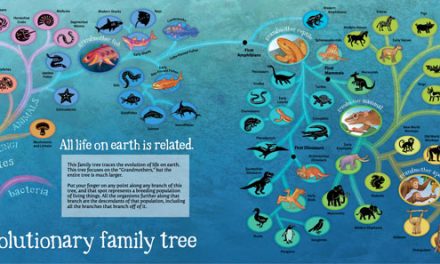
Richard Rohr’s Cosmic Egg is a metaphor consisting of concentric layers used to explain how our personal stories (“My story”) fits within larger narratives defined by family, group, or community (“Our story”) affiliations, along with wider societal/cultural trends (“Other stories”), and ultimately, a universal Spirit-Science truth (“The Story”). All these stories nest together like layers within an egg, or in a Russian doll, providing a framework for understanding our place in the world, in identifying growth sequences, in finding deeper meaning in life, and for illustrating their nexus in a true Spirit-Science synthesis. Rohr’s Cosmic Egg motif emphasizes the importance of acknowledging and integrating all these individual domes of meaning, each successive dome embracing the others, while unifying them in a universal “Big Story.” The successive levels trend toward wholeness and unitive consciousness and can adapt to cosmogenic models that bridge-build among previously siloed disciplines, particularly between science and religion. (see graphic at top of page, and click onto blue Resource tab for video on the identity of this universal common denominator in world religions.)
By understanding our place within the larger “Cosmic Egg,” one can access deeper holistic insights and connect with a sense of belonging to something greater than themselves, joined by a common universal element that science and religion can both agree on. In a world often fragmented by individual experiences and siloed disciplines, the Cosmic Egg provides a structure for finding meaning, purpose, and a practical framework for understanding and integrating psycho-spiritual growth trajectories, and a simple model for reconciling spirit-science tensions within the larger tapestry of life. And foremost, as an instructional icon for teaching children the ecological role of light in the whole.
In this advance and transcend model, Rohr argues that a healthy soul (psyche) requires integrating all these layers of meaning, not relying on just one individual layer to tell the Big Story, or to see the whole clearly. Though Rohr and Matthew Fox stop short of identifying this cosmic constant organically, they use the concept of the Universal or Cosmic Christ as a symbol for the unifying principle (constant) that connects all these levels of story, making it possible to then identify the essence of divine presence within all of creation, and the substance of all form that allows for an understanding of divinity as universal from the outset, revealed in the Genesis 1/Big Bang moment of creation. There simply cannot be two creation stories, religious and scientific. There is only one story operating out of a singularity seen from two different viewing platforms using different language to describe it. Such is the human habit of dividing the unified field via dualistic thinking, which inevitably results in choosing one side, depending on their bias.
All spring from the same ‘fontal’ property which we can express thusly; God reveals himself everywhere, beneath our groping efforts, as a universal milieu, only because he is the ultimate point upon which all realities converge (Teilhard).
Organically, a singularity by any other name is still the same.
Uncreated Light is the proverbial “Swiss Army knife” and living nexus in-cohering the entire created order, jacketing all things in the universe soulfully at all scales, acting externally like a hood or halo swaddles the human head, or an eggshell sheaths the egg’s entire content. Acting internally in material bodies as HVAC systems function in homes and office buildings, central air distribution spaces for the flow of heated or cooled air throughout their enclosures. Such is what lends the Cosmic Egg motif its universal applicability for The Story, and like a seed, renders it a fitting cosmic container for the New Universe Story and the energy that swaddles and informs it, innermost and outermost. All other stories fit (nest) snugly within its boundaries.
To enter into the secrets of The Story one must see and experience its hidden interior domain for themselves. While its truths can be taught conceptually, the experiences of same cannot, but must be individually accessed and attained. A person never truly knows a thing otherwise, they just have knowledge of it, a distinction with a major difference. Experientially, persons cannot enter-in two by two, or in groups. Neither a person’s own wisdom nor all their accumulated knowledge can bring them to The Story in a higher way, innermost and outermost. If one wishes to know it in that more interior way, their intellectual knowledge must become pure ignorance and forgetfulness of itself and all creatures, adopting a “beginner’s mind.” There is no rest short of being filled with total being via a transpersonal identity, and in no other way save by the self-emptying preparatory to enlightenment. Once there, there is no turning back, because unitive consciousness, and with it, unitive knowledge, repose, and peace are only found there. Neither matter nor reason rests until it is filled with everything that is within its potential in a higher order, found only by advancing in development, overcoming natural resistances to same.
The author’s cosmogenic model is but one of many models currently proposed worldwide. Said model is in harmony with at least one universal constant shared by science and religion (light), and with the Cosmic Christ of Fox, Rohr’s Universal Christ/Cosmic Egg model, and satisfying the synthesis vision of Teilhard.
Most significantly, this kind of Spirit-Science model is proposed as the Gospel 2.0, updating it in the broadest sense by identifying its universal organic component while expanding its dark, sin-redemption-judgement-only horizons, doing for global spirituality what Edison did for electricity, Ford for transportation, and Freud for psychosexual development — enlarging the definition and application of same. Such was something foretold by the Universal Christ in his time, slowly coming to fruition in our post-modern era.
I have said these things to you in figures of speech. The hour is coming when I will no longer speak to you in figures of speech but will tell you plainly about the Father (John 16:25).
Plainly speaking, the “Father” implies divinity’s constant and unchanging nature in the Godhead (singularity), and the source of all good gifts . . . coming to you from the Father of lights, with whom there is no variation, or shadow of turning (James 1:17)
What remains for those assembling other all-inclusive Spirit-Science models is to name the apex or universal constant sheathing, in-cohering, and informing all the layers (stages), gradually directing them to Itself (and themselves) and a growing spiritual awareness of same in ever larger domes of meaning. To summarize, such an all-inclusive paradigm shift will culminate in (a) the fulfillment of Teilhard’s mythical psycho-physical (Spirit-Science) synthesis, (b) clarity on the religio-scientific energy and dynamics of the Omega Point in history, (c) the key to transpersonal identity, wholeness, global solidarity, and the New Universe Story, and (d) a solution to the holy grail enigma of physics and Einstein’s field equations, reconciling global religions with general relativity and quantum mechanics in a general theory of everything (T.O.E.).
Reiterated in Rohr’s teaching, and implied in his Cosmic Egg paradigm of psycho-spiritual growth, most of humanity operates from and seldom exceeds the “My story” – “Our Story layers of development, and hence become mired there in the primordial layer of dualistic thinking (separation consciousness), the bane of every siloed discipline, cosmogenic model, and primary cause of all divisions, conflicts, and polarities within self, with others, nature, and the universe. Historically, few divisions and conflicts are greater than between religion and science, or between left and right brain thought and perception.
Such is why, some seventy-five years after Teilhard’s death, there have been no satisfying Spirit-Science breakthroughs fulfilling the mythological vision of either the ancients, or Teilhard, Einstein, and others who currently seek an integrated understanding of all things joined by a common universal element.
Despite inchmeal progress bogged down by multiple resistances to same, and judging by the current state of human affairs among and between nations and disciplines, sadly, it is unlikely to materialize anytime soon. Not without first traversing further personal and global chaos, tribulation, and dissolution, and/or by direct divine and/or non-human intervention(s).
There are many mental and emotional resistances to forming an all-inclusive vision of the cosmos, which involve levels of awareness and radical paradigm shifts foreign to ordinary thought and perception. The differences between the rational, transrational, and intuitive (spiritual) ways of apprehending reality (The Story) vary widely, differing less in degree than in kind, and can only be coordinated (synthesized) by a transpersonal identity and the kind of unitive consciousness informed by The Story. Unprepared minds are not ready for this, and via an assortment of psychological resistances and insulators (dissociation, denial, avoidance, and repression) are unlikely to clearly see, hear, or understand the more advanced domes of meaning beyond the “Me” and “Our” layers of being. Such otherwise tend to be identified strictly via empirical “data points” as an exclusive means of comprehending the whole, denying that the intuitive and transrational their proper place in the discovery of same. In reality, such persons are unprepared and unreceptive. This condition of stasis is common among the general population, particularly those embracing institutional forms of religion, and left-brain-only researchers found in science labs and the lecture halls of academia, those unaware of or uninitiated into forms of consciousness beyond the sense-bound natural and empirical.
The energy found in the higher order of things is like no other. Acting like a radically re-focused camera lens, it all but dissolves the material, psychic, and mortal sense of self and reality that predominates in the primary layers of “Me, “Our,” and the cumulative sense- bound experiences that formed them. The experience of same is often compared to lightning, which turns into itself whatever it strikes, be it a tree, an animal or person. If a person has turned his or her back to lightning, it turns the person’s face around in a second. If a tree has a thousand leaves, all of them turn their right side to the lightning bolt. This is what happens to all who enter into and are affected by that higher order. As an experience to undergo, persons are taken up by it. Henceforth, all things become manifestations of that order, and the new energy and single eye (third eye) vision of that order. And all things are then seen as they are (not we are, or were), imbued by that order. Such states of unitive consciousness offer a radical paradigm-shift from lower and coarser forms of being, knowing, and natural thought and sight. For the unprepared, it can be a bewildering shock to the entire sensorium. Those not equal to it will not understand and hence avoid same. They are intended and necessary blows to human egocentric security systems ever reluctant to sacrifice the better for the best, the smaller for the larger ways of living, seeing, loving, knowing, and reorienting the sense of self from flat-earth-as-center-of-the-universe stories, and archaic (dualistic) ways of being, thinking, and seeing.
A form of PTSD (post-traumatic stress disorder) ontological shock is often a condition that accompanies new or unwelcome changes requiring radical paradigm shifts as those that occur in crises, phase-of-life junctures, emergencies of all kinds, experiences in warfare, and catastrophes like car and plane crashes, or NDE’s (Near Death Experiences), powerful religious conversion experiences, UAP experiences (Unidentified Aerial Phenomena, including alien abductions), and those of NHI (Non-human Intelligence encounters) — all experiences that call upon expanded mental and emotional processing in order to effectively navigate and integrate them. By contrast, transpersonal shifts in awareness and perception, radical or gradual, are generally peaceful, pleasant, whole-making, and above all devoid entirely of the existential angst, fear, and dread common to the more pedestrian ways of seeing and thinking associated with ego as center, mortality, and the fear-based insecurities arising thereof.
Radical seeing requires a radical shift in perception informed by a single-point universal constant (singularity) that sees all things in its light, and accordingly, raises human consciousness and thought to its higher vibrational levels. To understand is to “stand under” the highest authority totally in heart, mind, soul, and spirit. In that sense, those not equal to its challenges will not “understand,” save perhaps conceptually (co-opted by their intellect), the great slayer higher truth.
This focus, the source, is thus found everywhere. It is precisely because He is so infinitely profound and punctiform that God is infinitely near, and dispersed everywhere. It is because He is the center that he fills the whole sphere (Teilhard).
Punctiform means “having the character of a dot or point” and suggests a vertically causal singularity outside space-time that originates and informs all things on the material plane, and toward which all things center, incline, and are drawn, like the apex of a cone — Teilhard’s favorite Omega Point metaphor.
. . . such that individually they cannot be looked at, each one, without the same reality being found in their inmost being — like sunlight in the fragments of a broken mirror — one beneath its multiplicity, and spiritual beneath its materiality. They bathe inwardly in light, but in this incandescence, they retain, this is not strong enough, they exalt all that is most specific in their attributes (Teilhard, The Divine Milieu).
The world stands at the threshold of unprecedented change and opportunities via the cumulative effects of climate change, the intensity of rapid technological advances, national upheaval, and global divisions. And lest we forget, on the eve of Earth’s sixth great extinction, the Doomsday Clock is ticking with no time outs, now at 90 seconds before midnight in the countdown to thermonuclear war. The question is, to what degree will these intensities create conditions for a foothold that accelerates integral progress that matters, transforming the low-grade carbon of human existence into the precious diamonds of unitive consciousness toward genuine synthesis and global unity? Or will the weight of their combined intensities lead to a continued free-fall into destabilization, polarization, rule by far-right politics into further chaos, fueled by more of the sterile science, sectarian religion, practical psychology, and consumer spirituality of the past?
Withal, humanity cannot and will not find either its hope of fulfillment outside of the spiritual dimension, awakened, inspired, and joined by its common universal element.
Joe Masterleo
About the Author
Joseph C. Masterleo, LCSW-DCSW, is a clinical social worker in private practice in Syracuse NY, and Rockledge FL. His half-century of service in the mental health care field includes faith-based counseling, with an emphasis on psycho-spiritual integration. His subspecialty involves developing a novel paradigm for the synthesis of science, religion, and psychology, identifying the energy and geometric patterns that connect the quantum world with space-time. His model explains how spirit and matter can co-exist as two facets of one reality in a unified field, dissolving the walls of partition between previously siloed disciplines. Inspired by the writings of Thomas Merton (ecumenism), Teilhard de Chardin (synthesis), Thomas Berry (ecotheology), and others, his objective is to tell a new, future-looking story for the Ecozic Age, one that forms a connecting bridge between the biblical story of creation, modern science, and ancient cosmologies. Further information about Joe and his Spirit-Science model can be found in his book The Ambient Christ, the Untold Story of God in Science, Scripture, and Spirituality, and on his website, www.joeknowsgod.com
- Used by people who call the work: New Cosmology, The New Story
- Applies a deep time evolutionary perspective to: Art, Current Issues, Education, Religion/Spirituality, Science
- Learning Stages: Adult Education, Higher Education, Lifelong
- Type: Article, Blog
- Keywords: transform, centration, cosmogonic, in-cohere, inner ecology, interstitial, cosmic evolution,de-cohere, transpersonal self/identity, tensegrity, Phanes, Orphic Egg, cosmic evolution, zero-point, Goethe, Jung, Universal Christ, Cosmic Christ, Richard Rohr, Teilhard, Matthew Fox, Einstein, St. Paul, T.O.E., singularity, Wisdom tradition, perennial principles, Einstein, synthesis
- Why I love this Resource: it fits into and summarizes the cosmogenic models of others globally
- Link to Resource: Click here
- Posted By: Joe Masterleo
- Date Added: March 10, 2025